
Does online therapy actually work? What the science says
By Claudia Lucas Cintado, Health Psychologist
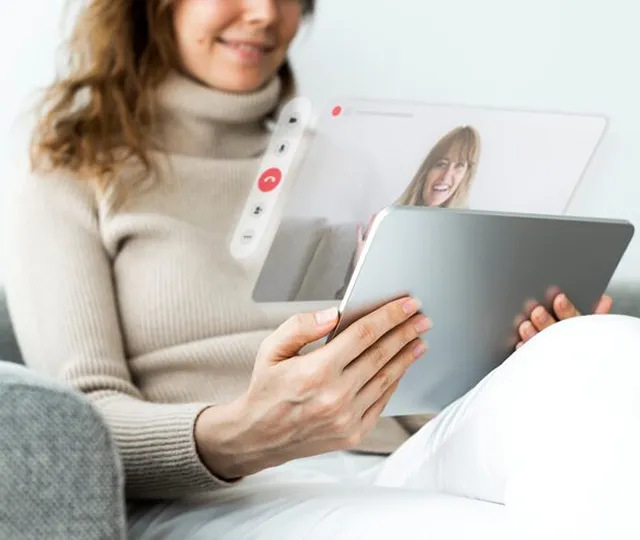
The million-dollar question
More and more people are considering starting therapy but have doubts about the online format. “Is it really as effective as going in person?”, “Do you lose the connection with the therapist?”, “Can I truly open up through a screen?”.
These are completely valid questions. Let’s answer them with data.
What the research says
Research on remote psychological interventions is broad and still growing. Available reviews report promising outcomes across different concerns, but they do not mean that one format is identical for every person, goal, or situation. Telepsychology guidance stresses individual suitability, professional qualifications, privacy, reliable technology, and a clear plan for urgent situations.
The best format is the one that supports safety, continuity, and a good therapeutic fit. This practice offers both online and in-person sessions, so the choice can be discussed around your needs.
Advantages you might not have considered
Your own space = more safety
Being on your sofa, with your blanket and a cup of tea, can help you feel more comfortable discussing difficult topics. Familiar surroundings lower the initial barrier of “going to the psychologist”.
No commute, no excuses
The biggest enemy of therapy is inconsistency. When you remove travel, traffic, and waiting time, it’s much easier to maintain session regularity. And regularity is key.
Real accessibility
If you live in a rural area, have reduced mobility, or simply a complicated schedule, online therapy opens a door that was previously closed.
When might online therapy fit well?
Online therapy may be practical when you:
- want to reduce travel or have a demanding schedule;
- have a private space and reliable connection;
- prefer to begin from a familiar setting.
When might it not be the best option?
There are situations where in-person therapy may be preferable: acute crises requiring immediate intervention, severe psychotic disorders, or circumstances where the person doesn’t have a private space to connect.
Before choosing a format
A therapeutic connection can be built by video call too, but it does not have to feel the same for everyone. An initial conversation can explore your preferences, the privacy of your setting, and whether online or in-person sessions are the better fit right now.
What I do recommend:
- Find a quiet space where you won’t be interrupted.
- Use headphones — they improve both privacy and audio quality.
- Prepare as if you were going to an in-person session — bring intention to the moment.
If you’ve been thinking about starting therapy but the format was holding you back, perhaps this is the sign you needed.
Sources and further reading
Shall we talk?
Did this resonate with you? Taking the first step is hard, but you don't have to do it alone.
Request an Assessment